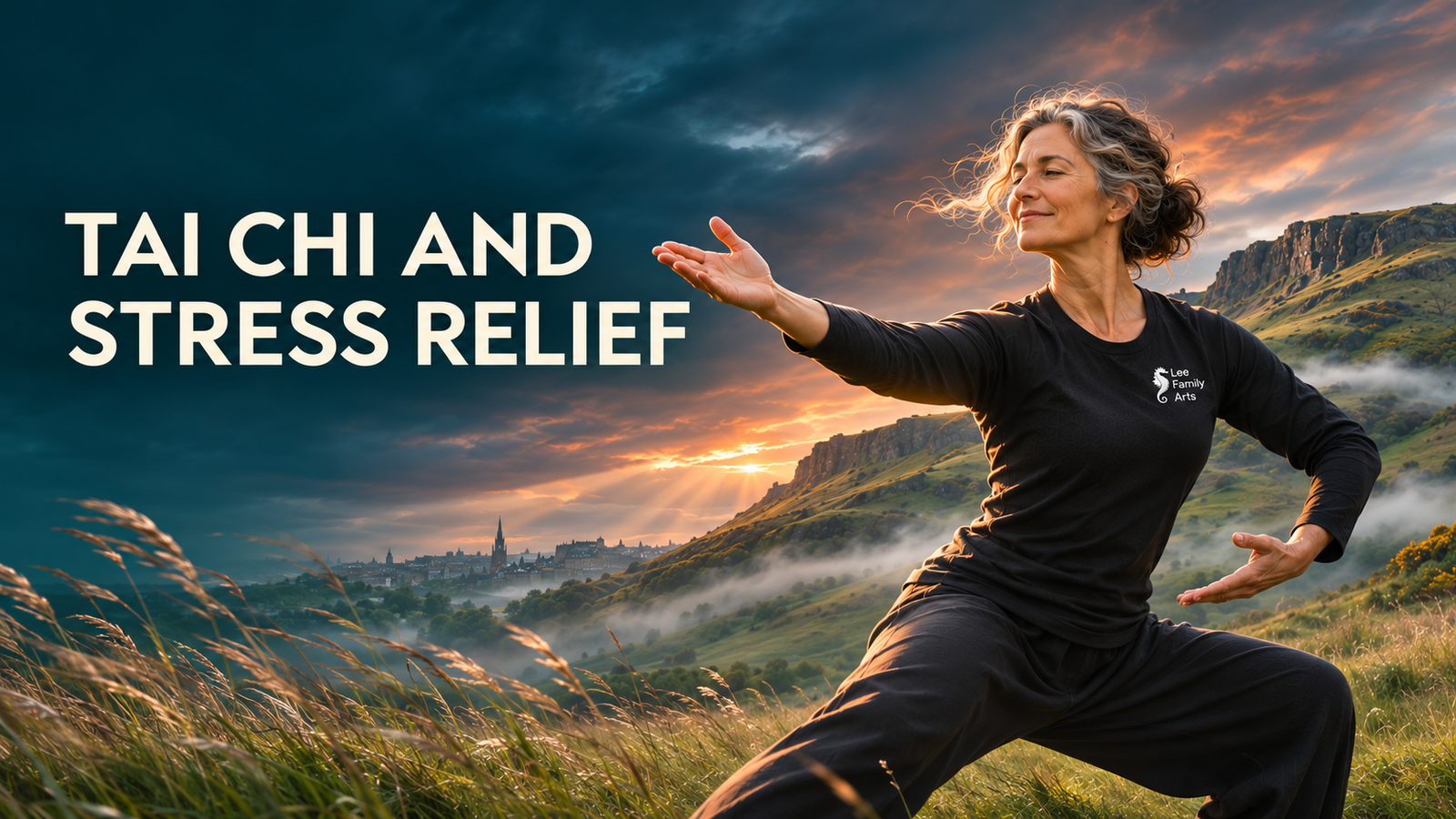
In the bustling streets of Edinburgh, where historic charm meets modern-day hustle, many residents seek a respite from the daily grind. Enter Tai Chi — an ancient Chinese practice gaining popularity as a powerful tool for stress relief and overall wellbeing, and the heart of what we teach at Tai Chi Edinburgh.
Tai Chi, often described as "meditation in motion," is a gentle form of exercise that combines flowing movements with deep breathing and mental focus. Originating in ancient China, this practice blends the principles of mindfulness and Traditional Chinese Medicine into a single, accessible daily practice that anyone can start — regardless of age or fitness level.
Why Consider Tai Chi For Stress Relief?
In our fast-paced world, stress has become an unwelcome companion for many. The gentle, rhythmic movements of Tai Chi offer a stark contrast to the frenetic energy of city life. But don't let its slow pace fool you — Tai Chi packs a powerful punch when it comes to stress management.
A study published in the Journal of Clinical Psychology found that Tai Chi was effective in reducing stress, anxiety, and depression symptoms in adults — with effects comparable to more active forms of exercise.
Edinburgh, with its rich cultural tapestry, has embraced Tai Chi with open arms. From the serene gardens of the Royal Botanic Garden to the comfort of your own living room via Zoom, practitioners experience the calm and focus that comes with regular practice.
Common Questions About Tai Chi For Stress

Slow, mindful movement that settles a busy mind.
How does Tai Chi reduce stress?
Tai Chi combines physical movement, breathing exercises, and meditation into a holistic approach. The slow, deliberate movements relax tense muscles, while the focus on breath and mindfulness quiets a racing mind and activates the body's natural "rest and restore" mode.
Do I need to be fit to start?
Not at all. Unlike high-impact exercises, Tai Chi is gentle on the joints and adapts to any fitness level. Whether you're a fitness enthusiast or haven't exercised in years, you can start today.
How often should I practise to see benefits?
Aim for at least 2–3 sessions per week. Most students notice improvements in stress levels and overall wellbeing within 4–6 weeks of regular attendance.
Can Tai Chi help with other health issues besides stress?
Absolutely. Beyond stress relief, Tai Chi improves balance, flexibility, and cardiovascular health. It's particularly beneficial for older adults, reducing fall risk and improving cognitive function — see our guide to Tai Chi for seniors in Edinburgh.
The Science Behind Tai Chi And Stress Relief
The Physiological Impact
| Effect | What Happens In Your Body |
|---|---|
| Lowering cortisol levels | Cortisol, often dubbed the "stress hormone," tends to spike under pressure. Regular Tai Chi practice has been shown to lower cortisol levels, reducing the physical symptoms of stress throughout the body. |
| Improving heart rate variability | A higher heart rate variability is associated with better stress management. Tai Chi's combination of gentle movement and deep breathing can significantly improve this key health metric. |
| Boosting endorphins | Like other exercise, Tai Chi triggers the release of endorphins — the body's natural feel-good chemicals — leading to improved mood that lasts well beyond the class. |
The Psychological Benefits
- Mindfulness in motion — By focusing on the present moment and the flow of movement, practitioners can quiet the mind and reduce anxiety — without needing to sit still.
- Improved body awareness — As you progress, you'll develop a keener sense of your body, helping you recognise and address tension before it builds into full-blown stress.
- Social connection — The community formed in our classes — whether in-person or on Zoom — provides a support network that is crucial for managing stress long-term.
Want to go deeper? Read why modern humans feel constantly stressed — the nervous system crisis nobody talks about.
"As a university student, I was looking for a way to manage stress. Tai Chi has been a game-changer. It's my daily ritual for mental clarity and peace — and I sleep so much better now."
Hamish, 22 — Newington, Edinburgh
Getting Started With Tai Chi In Edinburgh

In-person across Edinburgh or live on Zoom — your first class is free.
How To Begin
Practical Tips To Maximise Stress Relief

Tai Chi breathing works anywhere — at your desk, on the bus, before a hard conversation.
Making The Most Of Every Session
- Use breathing exercises anywhere — Tai Chi's deep, diaphragmatic breathing can be used anytime to combat stress. Try a few slow breaths at your desk, on the bus, or before a difficult conversation.
- Apply Tai Chi principles to daily life — The mindfulness and body awareness you develop in class can be applied to everything — from your commute to how you sit at your desk.
- Create a Tai Chi corner at home — Designate a quiet space for practice. It serves as a visual reminder and makes it easier to keep a regular routine.
- Combine with other stress-relief techniques — Tai Chi works beautifully alongside journalling, time in nature, or talking with someone trusted. It complements everything.
- Listen to your body — While challenge is good, pushing too hard creates more stress. Learn to recognise your limits in every session.
The slow, intentional movements of Tai Chi aren't just exercise — they're a daily reset for your nervous system. Most students leave class feeling measurably lighter than when they arrived.
"The Zoom classes are just as good as being there in person. John spots everything and the corrections he gives have made a real difference to my lower back pain — and I feel so much calmer generally."
Anne, 59 — Tuesday Zoom class, Edinburgh
LFA Lee Style Tai Chi: Why It Works For Stress
The LFA (Lee Style) practised at LFA Tai Chi Edinburgh is specifically designed around the healing principles of Traditional Chinese Medicine. Its flowing, circular movements require constant adjustment of stance and weight — effectively training the stabiliser muscles in the ankles, legs, and core while simultaneously calming the nervous system.
Key Features That Reduce Stress
| Feature | How It Reduces Stress |
|---|---|
| Slow, controlled movements | Force the mind to slow down and focus, naturally reducing anxious thought patterns |
| Breath synchronisation | Every movement is paired with intentional breathing, activating the parasympathetic nervous system |
| Mindfulness practice | Increases present-moment awareness, reducing rumination about past or future |
| Relaxation techniques | Reduces chronic muscle tension that accumulates from desk work and daily stress |
| Suitable for all levels | No pressure to perform or keep up — an entirely non-competitive environment |
"The Zoom classes fit perfectly into my working week. I do the Tuesday morning class before I start work and the difference it makes to how I handle the day is remarkable. Less reactive, more focused."
Claire, 44 — Tuesday Zoom class, Edinburgh
Class Prices
| Option | Price |
|---|---|
| First class | Free for new students |
| 4-Week Block | £24 — £6 per class, best value |
| Single Drop-In | £7 — pay as you go |
Find Your Calm In Edinburgh Today
If stress, anxiety, or low energy is affecting your daily life, Tai Chi is one of the most accessible and enjoyable steps you can take. No prior experience is needed — just comfortable clothes and a willingness to move gently.
Classes available Monday – Friday: morning, afternoon and evening sessions, both in-person across Edinburgh and live on Zoom. View the full timetable or call John directly to find the slot that suits your week.
Book Your Free First Class
Call or text John on 07450-979-625 to book your free first class. In-person at Edinburgh venues or live on Zoom — whichever feels right for you.
Book My Free First Class →All levels welcome · Edinburgh & online · 28 years teaching experience