Margaret was 72 when she first walked into my Tai Chi class. She came because her daughter had insisted, and she arrived wearing the politely sceptical expression of someone who has agreed to something mostly to keep the peace. Eighteen months later, she was the one persuading her neighbours to join.
Her story isn't unusual. In 28 years of teaching Tai Chi in Edinburgh, I've watched this practice transform older adults in ways that surprise even the most sceptical. Not by promising them their youth back — but by giving them something more valuable: confidence in their bodies, and calm in their minds.
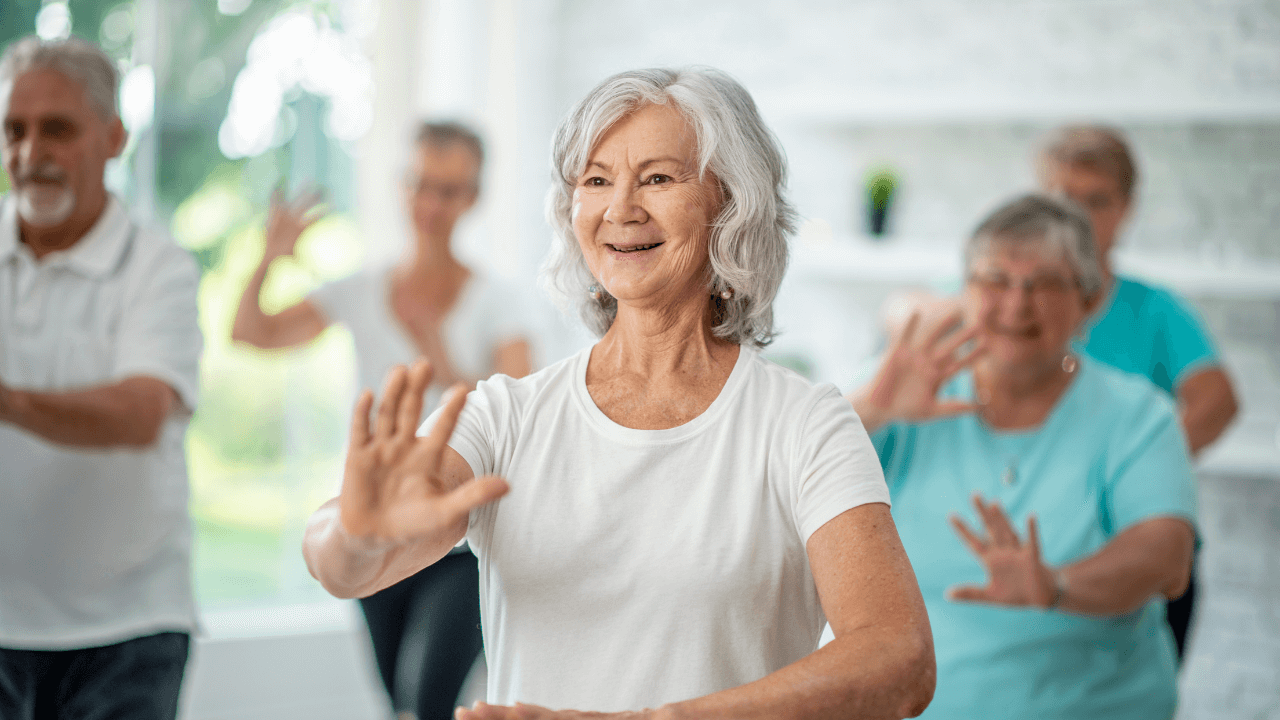
Tai Chi is one of the few forms of exercise that becomes more beneficial — not less — as we age
What This Article Covers
- The specific benefits of Tai Chi for older adults — with research numbers, not vague promises
- What to expect in a class — including how movements are adapted for individual abilities
- The social dimension — one of Tai Chi's most underrated benefits for seniors
- How to continue the practice at home between classes
What Tai Chi Actually
Does For Older Adults
Let me be specific — because Tai Chi's benefits for seniors are more concrete and better evidenced than most people realise. These aren't general wellness claims. They're specific, measurable outcomes backed by decades of clinical research.
58%
Fall risk reduction
The most consistent finding in senior Tai Chi research — directly relevant for Edinburgh's hills and cobblestones
40%
Reduction in chronic pain
Average pain intensity reduction reported after 12 weeks for arthritis and joint conditions
↓ BP
Blood pressure improvement
8–10 mmHg systolic reduction on average — comparable to some antihypertensive medication
These numbers come from peer-reviewed studies — the British Journal of Sports Medicine, the Journal of the American Geriatrics Society, and the Archives of Internal Medicine among others. The evidence base for Tai Chi in older adults is one of the strongest in gentle exercise research.
The Key Benefits
For Seniors
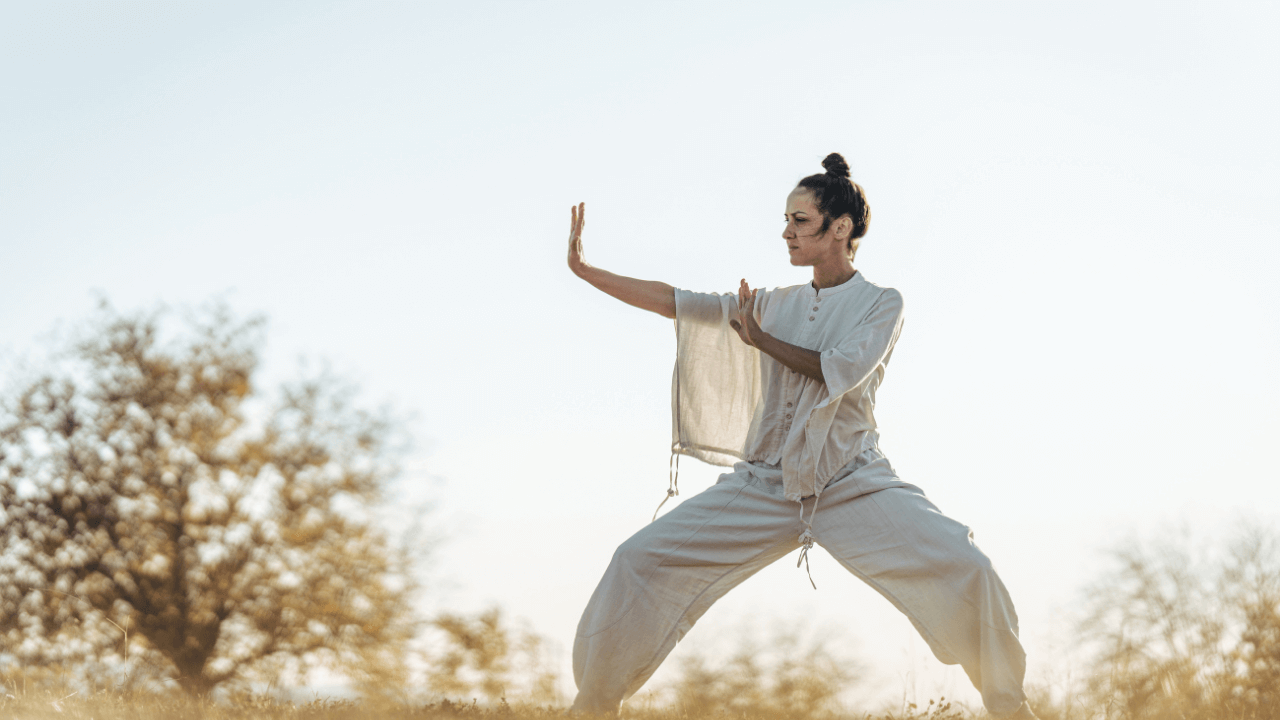
The combination of physical movement, breath, and mindful attention produces benefits that go far beyond what most single exercises can deliver
-
Improved Balance And Fall Prevention
Tai Chi's slow, weight-shifting movements retrain proprioception — your body's sense of its position in space — which deteriorates with age. This is the primary reason falls become more likely as we get older, and the primary reason Tai Chi reverses that trend. Students consistently report feeling more confident on Edinburgh's uneven streets within weeks.
-
Joint Pain And Arthritis Relief
The Arthritis Foundation specifically recommends Tai Chi. Zero-impact standing movements encourage the circulation of synovial fluid — the natural lubricant inside joints — reducing friction, inflammation, and stiffness. Unlike many exercises, Tai Chi never loads or jars an inflamed joint.
-
Stress Reduction And Better Sleep
The synchronised breath-movement practice activates the parasympathetic nervous system, measurably lowering cortisol. Better sleep is one of the most consistently reported benefits within the first 4–6 weeks — and improved sleep has cascading positive effects on pain management, mood, and cognitive function.
-
Cardiovascular Health
Despite its gentle appearance, Tai Chi provides genuine aerobic conditioning — keeping the heart rate elevated in the low-intensity zone that cardiovascular medicine increasingly recognises as the most beneficial for older adults. Blood pressure and circulation both improve with regular practice.
-
Cognitive Function And Mental Clarity
The dual demand of coordinating movement with breath and focused attention makes Tai Chi uniquely effective for cognitive health. Research shows improvements in executive function, memory, and processing speed — alongside significant reductions in anxiety and depression symptoms in older adults.
I started at 68 with two bad knees and real anxiety about falling. Within eight weeks my balance had improved enough that I stopped using the handrail on the stairs. John adapts everything — I've never once felt out of my depth.
— Robert, 71 · Wednesday class, Edinburgh
What To Expect
In A Class

Every class begins gently and builds gradually — there is no expectation of perfection and no comparison between students
The Structure Of A Typical Session
- Warm-up — gentle stretches and breathing exercises to prepare the body. Joints are warmed gradually, never forced
- Movement learning — John introduces postures and transitions one step at a time, with clear explanations and multiple demonstrations. Nobody is left behind
- Breath coordination — synchronising breath with movement, which is where much of the therapeutic benefit originates
- Cool-down and integration — a brief period of standing meditation that helps the body absorb what it has practised. Most students leave feeling measurably calmer and lighter than when they arrived
How Movements Are Adapted For Individual Abilities
No two students do exactly the same version of any movement in John's classes. If your right knee is worse than your left, the stance is adjusted. If bending causes discomfort, the range of motion is reduced. If you need a chair nearby for balance confidence, it's there. The practice adapts to you — not the other way around.
This is the central difference between LFA (Lee Style) Tai Chi and many other styles. The shorter stances and health-focused design mean there are no deep bends, no locked positions, and no movements that require existing flexibility or strength to perform safely.
What To Wear And Bring
Loose, comfortable clothing that allows easy movement — sweatpants and a t-shirt are ideal. Flat shoes with good grip for venue classes. For Zoom classes, socks or bare feet at home. No mat, no equipment, nothing to buy. For Zoom, you need only a phone or laptop and 1.5 metres of clear floor space.
Tell John about your health before your first class. Any joint issues, recent surgery, balance concerns, or chronic conditions — the more he knows, the better he can adapt every movement from your very first session.
Ready to try a free class?
Your first session at LFA Tai Chi Edinburgh is completely free — in-person or live on Zoom. No commitment required.
Book Free Class →
The Social Dimension:
More Than Just Exercise
One of Tai Chi's most underrated benefits for seniors is what happens around the practice, not just during it. Regular classes create community — and community is one of the most powerful protective factors for both physical and mental health in later life.
01
Connecting With Like-Minded People
Regular classes put you alongside others who share your interest in moving well and feeling better — often people at similar life stages with similar concerns and experiences.
02
Making New Friends
Several of our Edinburgh students have formed genuine lasting friendships through the classes. Some arrange informal walks, coffee mornings, and outdoor practice sessions between formal classes.
03
Staying Mentally Active
The combination of learning new movements, remembering sequences, and coordinating with others keeps the brain actively engaged in ways that benefit long-term cognitive health.
04
Reducing Isolation
For seniors living alone or away from family, a regular weekly class provides a reliable social anchor — a community that notices if you're not there and genuinely cares about your progress.
At 74 I'd given up on being physically active. My arthritis made most movement painful. Within a month my GP commented on how much better I was moving. I feel stronger than I did at 60. And I've made real friends in the class.
— Frances, 74 · osteoarthritis & hip pain, Edinburgh
Continuing At Home
Between Classes

Home practice between classes — even just 10 minutes using the Zoom recording — dramatically accelerates progress
The students who progress fastest are not always those who attend class most frequently. They're the ones who practise a little, consistently, between sessions. Here's how to make that work without it feeling like homework:
- Use the Zoom class recording — all LFA Tai Chi Edinburgh Zoom sessions are recorded. Pull up 10 minutes of the recording on your TV, tablet, or phone on non-class days. This gives your home practice proper guidance rather than relying on memory
- Attach it to an existing habit — practise immediately after your morning coffee or before your evening meal. Connecting Tai Chi to something you already do every day makes it automatic rather than a decision
- Start with just three minutes — commit to three minutes. You'll almost always do more. But the commitment to three means you never skip it because you "don't have time"
- Use the breathing anywhere — the slow, diaphragmatic breath from class can be used at any moment: sitting in a chair, waiting for a bus, lying awake at night. The calming effect is immediate and carries no cost
- Practice outdoors when Edinburgh cooperates — Princes Street Gardens, the Meadows, and Holyrood Park are all beautiful practice spaces once you've built a foundation in class
Common Questions
How long does it take to see results?
Most seniors notice something within the first few sessions — a physical calm that lasts several hours after class, and slightly better sleep. More significant changes — improved balance, reduced joint stiffness, measurable blood pressure improvements — typically become clear within 4–8 weeks of attending two or more sessions per week. The practice compounds over months and years rather than plateauing.
Are there age restrictions for Tai Chi classes?
No upper age limit — Tai Chi is practised by people in their 80s and 90s. LFA Tai Chi Edinburgh welcomes students of any age. The practice adapts to every individual's current physical reality, so age is never a barrier. The only question is where you're starting from, and John will work with that.
Is Tai Chi safe if I have arthritis or joint problems?
Yes — and it's specifically recommended for these conditions by the Arthritis Foundation and many rheumatologists. Tai Chi's zero-impact standing movements never load or jar inflamed joints. LFA (Lee Style) Tai Chi uses shorter stances than other styles, placing even less stress on knees and hips. Tell John about your specific joints before your first class.
What if I've never exercised before?
This is one of the most common starting points for senior students at LFA Tai Chi Edinburgh. The practice requires no baseline fitness, no flexibility, and no coordination. It builds all of those things gradually from wherever you begin. John has taught students in their 70s and 80s who hadn't exercised in decades — all of them were moving better within weeks.
Can I attend by Zoom if I can't get to a venue?
Yes — all LFA Tai Chi Edinburgh classes are available live on Zoom, and all Zoom sessions are recorded so you can practise at home between classes. You need only a phone, tablet, or laptop with a camera, and 1.5 metres of clear floor space. John can see and correct every student on screen just as effectively as in person.
Tai Chi is one of the rare practices that genuinely improves with age. The longer you practise, the deeper the benefits become — and the more naturally the principles carry into everything else you do.
If you're a senior in Edinburgh looking for a gentle, evidence-backed way to stay strong, balanced, and mentally sharp — call or text John on 07450-979-625. Your first class is completely free. He'll find the right session for you and adapt every movement to where you're starting from today.